

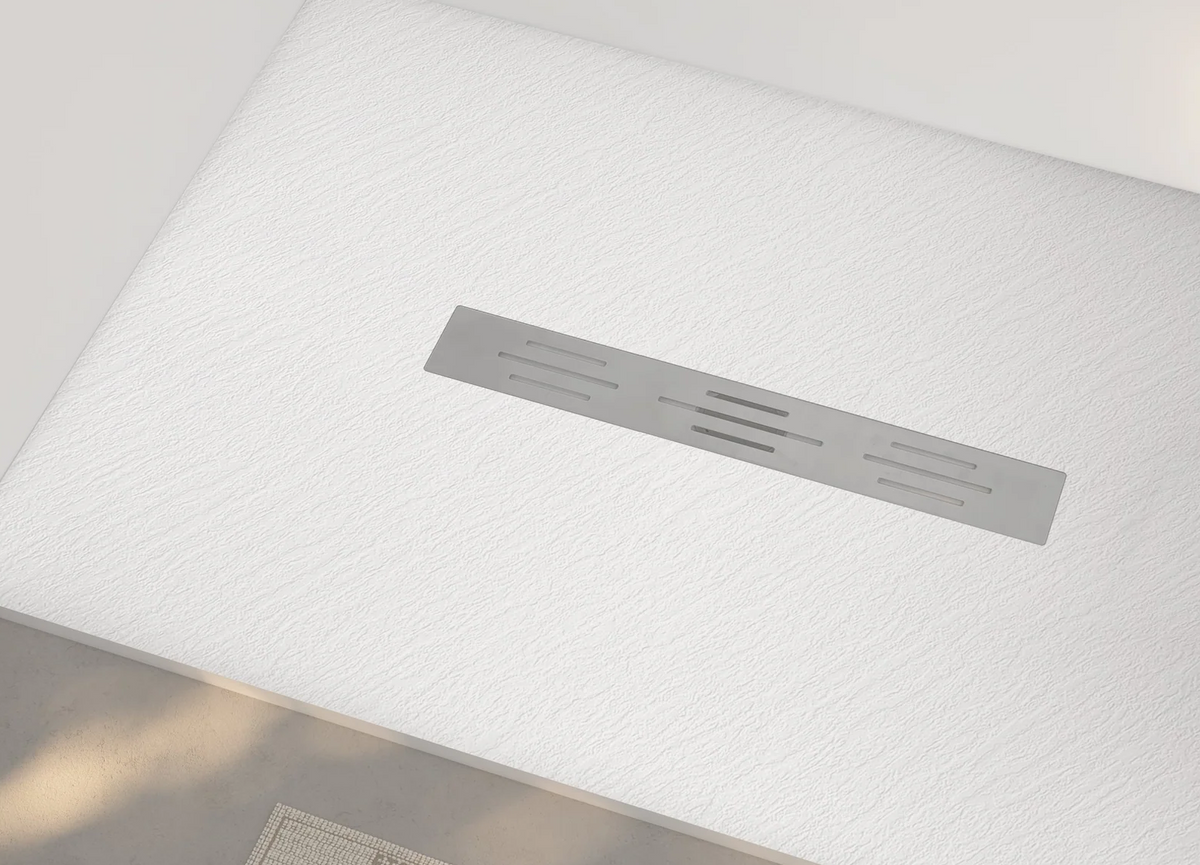
Choosing a shower base for a multifamily project involves more than comparing prices and dimensions. The right product must fit the bathroom layout, manage water effectively, withstand repeated use, and support a consistent installation process across multiple units.
For contractors, developers, and procurement teams, overlooking these details can lead to installation delays, material waste, avoidable rework, and higher maintenance costs after occupancy.
Before placing a bulk order, here are seven factors worth checking.
1. Confirm Dimensions and Drain Compatibility
The first step is confirming that the shower base fits the approved bathroom layout. A product that looks suitable in a catalog may not align with the actual framing, plumbing rough-in, or available installation space.
Before ordering, verify:
-
Overall length, width, and threshold dimensions.
-
Drain location and compatibility with the planned plumbing connection.
-
Available installation clearance and surrounding wall dimensions.
-
Compatibility with the specified shower wall system and enclosure, where applicable.
Drain alignment deserves particular attention. If the plumbing rough-in is completed before the shower base is finalized, discrepancies between the specified product and the installed drain location may require additional work.
For projects with multiple floor plans, confirm the requirements for each bathroom type instead of assuming that one specification applies to every unit.
Procurement tip: Request the dimensional drawing and drain-location information for the exact product model before approving the order. Share the confirmed specifications with the relevant project trades.
2. Evaluate the Material for Long-Term Performance
The material of a shower base influences its durability, surface characteristics, handling requirements, and maintenance needs.
Common options include acrylic, fiberglass, composite materials, and tile-based assemblies. Each has different construction characteristics, so the best choice depends on the project specification, budget, installation approach, and expected use.
When evaluating a product, consider:
-
Structural stability: Is the product designed to maintain its shape under its intended service conditions?
-
Impact resistance: Can it withstand reasonable handling and the demands of installation?
-
Surface durability: How does the finish perform under regular use and cleaning?
-
Moisture management: Is the product designed for wet-area use, and how must it be installed and sealed?
-
Maintenance requirements: What routine care is needed to preserve its appearance and performance?
For multifamily housing, these questions matter because a small material issue can become a recurring maintenance problem when the same product is installed across dozens or hundreds of bathrooms.
SMC (Sheet Molding Compound) is one composite material used in bathroom products. SMC shower bases are formed through a compression-molding process, making manufacturing consistency and product-specific quality checks important considerations during supplier evaluation.
Rather than relying on material names alone, review the manufacturer's technical documentation and confirm that the product meets the project's actual performance requirements.
3. Check the Slope and Water-Containment Design
A shower base must direct water toward the drain and help keep it within the intended shower area. Its surface geometry and edge design therefore deserve close attention.
Three details are particularly important.
Drainage slope
The floor should be designed to direct water toward the drain without unintended low spots that allow water to remain on the surface. Check the manufacturer's drawings and installation instructions for the intended drainage design.
Edge and threshold design
The perimeter, threshold, and any integrated upturns should be evaluated in relation to the surrounding wall assembly. Their design affects how the base connects with adjacent surfaces and how water is contained within the shower area.
Installation and sealing interfaces
Even a well-designed shower base depends on correct installation. Drain connections, wall-to-base transitions, compatible sealants, and other specified interfaces must be handled according to the manufacturer's instructions.
It is important to distinguish between a water-resistant product surface and a complete installed shower assembly. The base alone does not eliminate the need to follow the specified installation and sealing requirements.
For project teams, reviewing these details before procurement can help identify potential coordination issues before materials arrive on site.
4. Consider Installation Efficiency Across Multiple Units
Installation speed becomes particularly important in multifamily construction, where the same task may be repeated throughout an entire building.
A shower base that is straightforward to handle and install can help crews maintain a consistent workflow. However, installation efficiency depends on more than the product itself.
Consider the following questions:
-
Is the product supplied with clear installation instructions?
-
Are the handling and positioning requirements practical for the project?
-
Does installation require additional preparation or support materials?
-
Can the work be repeated consistently across similar units?
-
Are the installation sequence and required trade coordination clearly defined?
A useful way to evaluate labor impact is to consider the entire installation process rather than looking only at the time required to position the base.
For example, an installation method that reduces unnecessary adjustments or simplifies coordination may provide value across a large project, even if the difference in installation time for a single unit appears small.
Before making assumptions about labor savings, request realistic installation guidance and assess the requirements against your project's actual site conditions.
5. Look for Consistency Across Production Batches
A shower base specified for one bathroom must meet the same requirements as the bases installed in the rest of the building.
When ordering in volume, consistency matters in several areas:
-
Dimensional accuracy and fit.
-
Surface finish and appearance.
-
Drainage geometry.
-
Edge and perimeter features.
-
Packaging and protection during transportation.
Inconsistent products can complicate installation, increase inspection requirements, and make it more difficult to maintain a uniform finish across completed units.
Ask potential suppliers how product quality is checked during manufacturing and how specifications are maintained across production batches. Where appropriate, review inspection records, sample approvals, and applicable quality documentation before confirming a large order.
For developers and contractors, the goal is not simply to receive the correct number of products. It is to receive products that consistently match the approved specification.
6. Review Packaging, Delivery, and Supply Capacity
Product selection is only one part of procurement. Materials must also arrive in suitable condition and align with the construction schedule.
A shower base can meet the technical specification and still create problems if it arrives damaged, is difficult to handle, or is delivered after the installation team is ready to proceed.
Before placing an order, confirm:
Packaging protection: How are the products protected against impact, abrasion, and movement during transportation?
Delivery schedule: What are the production lead time, shipping arrangements, and expected delivery window?
Order consistency: Can the supplier maintain the agreed product specifications and quantities throughout the order?
Quality documentation: Are the relevant technical data, installation instructions, and inspection documents available?
Communication: Who will handle questions about specifications, production status, packaging, and shipment coordination?
For large residential projects, procurement teams should also consider how products will be received, stored, and distributed to the relevant work areas.
Clear expectations established before production can reduce uncertainty later in the project.
7. Compare Total Project Cost, Not Just Unit Price
The lowest purchase price does not necessarily result in the lowest overall project cost.
A more complete evaluation considers the purchase price alongside installation labor, handling, potential rework, material waste, and ongoing maintenance.
For example, a product with a slightly higher unit price may still be worth evaluating if its installation requirements are simpler or its manufacturing consistency better supports repetitive work. Conversely, a premium product may not be necessary if its additional features do not address the project's actual requirements.
A practical comparison should include:
| Cost factor | What to evaluate |
|---|---|
| Purchase price | Unit cost and total order value |
| Installation | Labor, preparation, and required materials |
| Coordination | Compatibility with plumbing and surrounding systems |
| Rework risk | Potential fit, drainage, or installation issues |
| Logistics | Packaging, shipping, handling, and storage |
| Maintenance | Expected cleaning requirements and product care |
| Supply reliability | Ability to meet agreed quantities and delivery schedules |
Not every factor can be reduced to a precise number before construction begins. Nevertheless, documenting the assumptions behind a purchasing decision helps project teams compare suppliers on a more consistent basis.
Choosing a Shower Base Supplier for Your Next Project
A reliable shower base supplier should do more than provide a product catalog and quotation. Project teams need clear specifications, consistent manufacturing, appropriate packaging, and timely communication throughout the procurement process.
Kostone provides SMC shower bases and other engineered bathroom solutions for North American construction projects. With manufacturing experience spanning more than 40 years, the company focuses on bathroom products designed to support durability, installation efficiency, and consistent project delivery.
For contractors, developers, and procurement teams, the key is to select products that fit the project's technical requirements and work within its construction process.
Before placing your next bulk order, review the specifications, confirm the installation interfaces, and evaluate the supplier's ability to support the project from production through delivery.
Explore Kostone's bathroom solutions at https://www.kostoneus.com/ or contact our team to discuss your project requirements.
Share:
3 Bathroom Project Case Studies: Lessons for Builders, Property Managers, and Retail Partners