

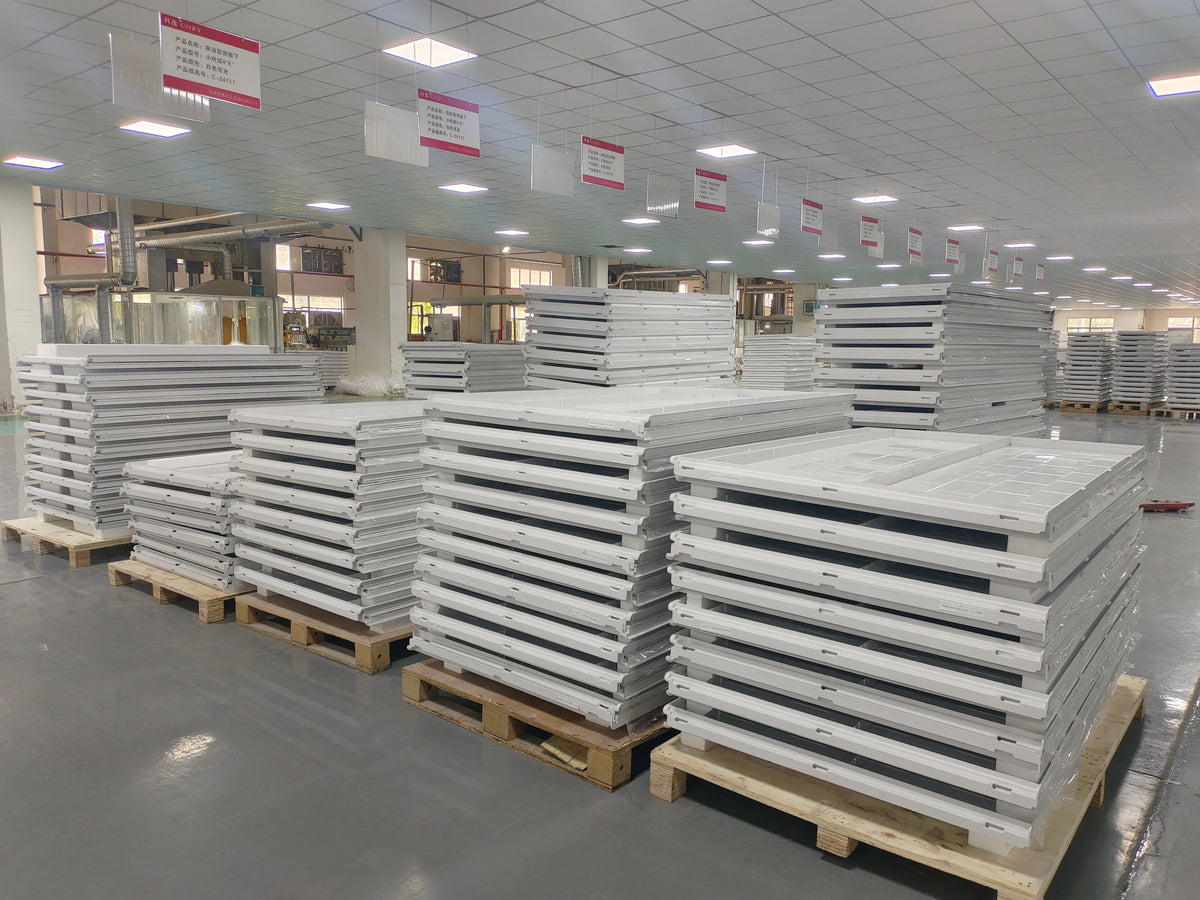
In a single-family home, one bathroom is one bathroom.
In a multifamily development, the equation changes completely.
A project with hundreds of units may contain hundreds of nearly identical bathrooms. Every shower has to meet the same design intent, construction requirements, waterproofing expectations, schedule, and quality standards.
That means a small problem in one shower is not necessarily a small problem for the project.
A difficult installation method can be repeated hundreds of times. A material coordination issue can affect multiple trades. A waterproofing mistake can become a punch-list issue, a repair problem, or a costly post-occupancy concern.
For developers, general contractors, architects, and procurement teams, the real question is therefore not simply:
“What shower looks good?”
It is:
“What shower construction approach can be repeated consistently across an entire project?”
This guide examines the most common challenges in multifamily shower construction and the factors project teams should evaluate before selecting a bathroom system.
1. Why Multifamily Shower Construction Is Different
Multifamily bathrooms are repetitive by nature.
That repetition creates an important advantage: once a bathroom assembly has been properly designed and approved, the same approach can potentially be used across dozens or hundreds of units.
But repetition also magnifies problems.
If one installation requires an extra hour of labor, the impact is very different when the same process is repeated across 300 bathrooms.
If one detail creates a recurring waterproofing problem, the issue may appear throughout the project.
If one material is difficult to coordinate with another trade, the resulting delay can repeat across floors and buildings.
This is why multifamily bathroom construction should be evaluated as a production process, not simply as an individual bathroom installation.
The key considerations include:
-
Number of units
-
Bathroom layout consistency
-
Number of trades involved
-
Material coordination
-
Installation sequence
-
Waterproofing details
-
Labor availability
-
Quality control
-
Material handling
-
Schedule requirements
-
Maintenance after occupancy
-
Long-term consistency
The goal is not necessarily to eliminate traditional construction methods. It is to determine whether the selected approach is appropriate for the scale and requirements of the project.
2. Challenge #1: Too Many Components Can Create Too Many Interfaces
A traditional shower assembly may involve multiple materials and trades.
Depending on the design, the process can involve framing, plumbing, substrate preparation, waterproofing, shower pan construction, tile installation, grouting, sealing, and finishing.
Each individual component may perform well on its own.
The challenge is what happens between the components.
Every transition creates another interface that needs to be properly coordinated.
For example:
-
Wall to shower base
-
Shower base to drain
-
Wall panel or tile to corner
-
Tub to wall
-
Waterproofing layer to penetration
-
Plumbing fixtures to finished wall
-
Accessories to wet-area surfaces
These interfaces deserve particular attention because the performance of a shower assembly depends on the complete installation—not simply on the specifications of one product.
For a multifamily project, reducing unnecessary interfaces can simplify both installation and quality control.
3. Challenge #2: Waterproofing Is a System, Not a Single Product
Waterproofing is one of the most important considerations in any shower installation.
The International Plumbing Code addresses shower floors and walls as wet-area assemblies and requires appropriate waterproof, nonabsorbent materials and watertight joints. For shower floors using conventional liners, the code also addresses slope toward the drain and watertight connections. (ICC Codes)
But compliance is only one part of the discussion.
The practical question for a project team is:
How many opportunities are there for installation error?
A waterproofing strategy may depend on:
-
Substrate preparation
-
Membrane installation
-
Seams
-
Corners
-
Penetrations
-
Drain connections
-
Wall-to-floor transitions
-
Slope
-
Sealants
-
Installation sequence
The more complicated the assembly, the more important installation quality becomes.
For multifamily projects, the objective should be to create a waterproofing approach that is not only technically sound, but also repeatable and easy to control across many units.
4. Challenge #3: Labor Is a Project Variable
Labor availability can change during a project.
So can productivity.
A construction method that works well with a highly experienced specialist crew may become more difficult when labor availability is limited or when multiple subcontractors are working under schedule pressure.
This is particularly important for repetitive bathroom construction.
A project team should ask:
-
How many trades are required?
-
How many site visits does each trade need?
-
How long does each bathroom take?
-
Which steps require specialized labor?
-
Can installation quality be maintained across different crews?
-
How much training is required?
-
What happens if the planned crew is unavailable?
This changes the conversation from simply labor cost to labor dependency.
A bathroom solution that reduces unnecessary installation steps can potentially make the construction sequence easier to manage.
5. Challenge #4: Installation Sequence Can Affect the Entire Schedule
Bathrooms rarely exist in isolation.
Their installation has to fit into the larger construction schedule.
Framing, plumbing, electrical work, drywall, waterproofing, flooring, wall finishes, fixtures, and final finishing all have to occur in a logical sequence.
When one trade cannot complete its work, another trade may be unable to start.
This creates the possibility of trade stacking, return visits, and schedule conflicts.
For a multifamily development, project teams should therefore evaluate not only how long a product takes to install, but also:
How does the product affect the sequence of work around it?
A simpler bathroom assembly can potentially reduce the number of dependencies between trades.
That can be more valuable than shaving a few minutes from one isolated installation step.
6. Challenge #5: Consistency Becomes Harder as Unit Counts Increase
A bathroom that looks perfect in one unit is not necessarily a successful multifamily bathroom solution.
The real test is whether the same result can be reproduced across the entire project.
Consider a 300-unit development.
The project team may need hundreds of shower walls, bases, corners, niches, transitions, and finished surfaces to look and perform consistently.
This makes repeatability a critical design criterion.
A good multifamily bathroom solution should allow the team to establish a clear installation standard that can be repeated from:
Unit 101 → Unit 201 → Unit 301 → Building 2 → Building 3
The more standardized the installation process can become, the easier it may be to establish quality-control checkpoints.
7. Challenge #6: Material Handling Starts Before Installation
Construction materials do not magically appear at the bathroom wall.
They have to be:
-
Manufactured
-
Packaged
-
Shipped
-
Received
-
Stored
-
Moved through the jobsite
-
Delivered to the correct unit
-
Installed
-
Protected from damage
This is especially important for multifamily developments where hundreds of units may be under construction simultaneously.
A material that is difficult to store, move, identify, or protect can create additional site-management work.
Procurement teams should therefore look beyond the product specification sheet.
Questions worth asking include:
-
How is the product packaged?
-
How many pieces are required per bathroom?
-
Can components be clearly identified?
-
How much jobsite storage is required?
-
How easily can materials be moved between floors?
-
What is the expected lead time?
-
Can the supplier support repeated project deliveries?
In large projects, logistics are part of installation.
8. Challenge #7: Design Flexibility Has to Work With Construction Reality
Multifamily projects need consistency, but they also need design differentiation.
Developers may want different finishes for different unit types, upgraded bathrooms for premium units, or different layouts for different floor plans.
This creates a balance:
Standardize what should be standardized.
Differentiate what actually needs to be different.
The mistake is to assume that every bathroom needs to be completely unique.
For repetitive construction, excessive variation can increase:
-
SKUs
-
Material coordination
-
Installation instructions
-
Procurement complexity
-
Training requirements
-
Quality-control requirements
A better approach is to establish a controlled range of bathroom configurations.
That allows the design team to maintain visual variety while keeping the underlying construction process manageable.
9. Challenge #8: The Bathroom Should Be Evaluated for Its Entire Life Cycle
The construction team is responsible for getting the bathroom built.
The owner and property-management team are responsible for living with it afterward.
That makes maintenance an important part of material selection.
A bathroom surface should be evaluated not only for how it looks on installation day, but also for:
-
Moisture exposure
-
Cleaning
-
Surface durability
-
Joint maintenance
-
Mold and mildew risk
-
Damage during tenant turnover
-
Ease of replacement or repair
-
Long-term appearance
This is particularly important in rental housing.
The bathroom will be cleaned repeatedly, used repeatedly, and exposed to moisture every day.
A design that minimizes unnecessary joints and complicated maintenance requirements may offer operational advantages over the life of the property.
10. Challenge #9: Quality Control Must Be Repeatable
Quality control becomes more difficult when there are hundreds of bathrooms.
The solution is not simply to inspect more.
It is to make the installation process easier to inspect.
Project teams can establish standardized checkpoints such as:
-
Substrate condition
-
Shower base installation
-
Drain connection
-
Slope
-
Wall installation
-
Corner and joint treatment
-
Fixture penetrations
-
Sealant
-
Final finish
The exact inspection requirements will depend on the project, specifications, applicable codes, and selected system.
The important principle is simple:
A quality standard is more useful when the installation process makes that standard repeatable.
11. Challenge #10: The Supplier Is Part of the Construction Strategy
For a multifamily project, selecting a bathroom product is not the same as selecting a bathroom supplier.
The supplier also becomes part of the project's material and logistics chain.
Before approving a supplier, project teams should consider:
Manufacturing capability
Can the supplier consistently produce the required volume?
Product consistency
Will products supplied across multiple batches maintain consistent dimensions, finish, and performance?
Documentation
Can the supplier provide the technical documents, test reports, certifications, installation information, and other project documentation required by the design and construction teams?
Supply capacity
Can the supplier support the project's expected schedule and delivery requirements?
Packaging and logistics
Are products packaged appropriately for transportation and jobsite handling?
Warranty
What product warranty is provided, and what exactly does it cover?
Project support
Can the supplier provide the information needed by contractors, architects, and procurement teams before installation?
For large projects, these questions can be just as important as the appearance of the finished bathroom.
How to Evaluate a Multifamily Shower Solution
Instead of asking only:
“Which shower product is the cheapest?”
project teams can evaluate a solution across several categories.
| Evaluation Area | Questions to Ask |
|---|---|
| Waterproofing | How is water managed at walls, joints, corners, and the shower base? |
| Installation | How many steps are required? |
| Labor | How many trades and specialized installers are involved? |
| Repeatability | Can the same installation method be repeated across hundreds of units? |
| Materials | How many separate components are required? |
| Coordination | How many interfaces exist between products and trades? |
| Logistics | How are products packaged, stored, and delivered? |
| Quality Control | Can installation quality be checked consistently? |
| Maintenance | What will the property team need to maintain after occupancy? |
| Design | Can the solution support the project's required appearance and configurations? |
| Documentation | Are technical and certification documents available? |
| Supply | Can the supplier support the project's volume and schedule? |
This approach shifts the conversation from product price to project performance.
Where Engineered Bathroom Solutions Can Fit
For projects with repetitive bathroom layouts, engineered bathroom components can offer another way to approach construction.
Instead of building every wet-area surface from numerous individual materials and processes, project teams can consider solutions that integrate more of the bathroom assembly into purpose-designed components.
For example, an engineered bathroom approach may combine:
-
Bathroom wall panels
-
Shower bases
-
Tub and shower units
-
Integrated design details
-
Standardized installation methods
-
Controlled manufacturing
The objective is not simply to make the product faster.
The larger objective is to make the construction process more predictable.
That distinction matters.
In a 10-unit project, a small process inefficiency may be manageable.
In a 300-unit project, the same inefficiency can be repeated hundreds of times.
A Better Way to Think About Multifamily Bathrooms
The biggest mistake in multifamily bathroom planning is treating every bathroom as an individual room.
A better approach is to treat the bathroom as a repeatable construction assembly.
That means asking four questions early:
1. Can it be installed consistently?
The installation method should be clear enough to establish a repeatable process.
2. Can it be coordinated efficiently?
The number of materials, trades, interfaces, and return visits should be considered during planning.
3. Can its performance be controlled?
Waterproofing, drainage, joints, surfaces, and other critical details should have clear quality-control requirements.
4. Can the supplier support the project?
The product is only one part of the equation. Manufacturing capacity, documentation, packaging, logistics, and project support all matter.
Conclusion
Multifamily shower construction is not simply a question of choosing tile, a shower pan, or a wall finish.
It is a question of how reliably the entire bathroom can be designed, supplied, installed, inspected, and maintained—hundreds of times over.
Waterproofing remains fundamental. But project teams also need to consider labor dependency, trade coordination, installation sequence, material logistics, repeatability, quality control, maintenance, and supplier capability.
The best bathroom construction strategy is therefore not necessarily the one with the fewest components or the lowest initial material price.
It is the one that fits the project's requirements and creates a construction process that the team can execute consistently from the first unit to the last.
For developers and contractors working on multifamily projects, that is the real opportunity:
Design the bathroom not just for the individual unit, but for the entire project.
What to Ask Before Approving a Multifamily Bathroom System
Before finalizing a shower or bathroom solution, project teams should be able to answer:
-
How will waterproofing be achieved?
-
How many trades are involved?
-
How many installation steps are required?
-
Can the process be repeated across the entire project?
-
How will materials be packaged and delivered?
-
How will installation quality be inspected?
-
What maintenance will be required after occupancy?
-
What technical documentation is available?
-
Can the supplier support the project's volume and schedule?
-
Does the complete solution fit the project's design, performance, and construction requirements?
These questions can help developers, contractors, architects, and procurement teams evaluate bathroom solutions based on the whole project—not just the product on the specification sheet.
Share:
Bathroom Wall Panels vs Tile: Cost, Time & Performance