

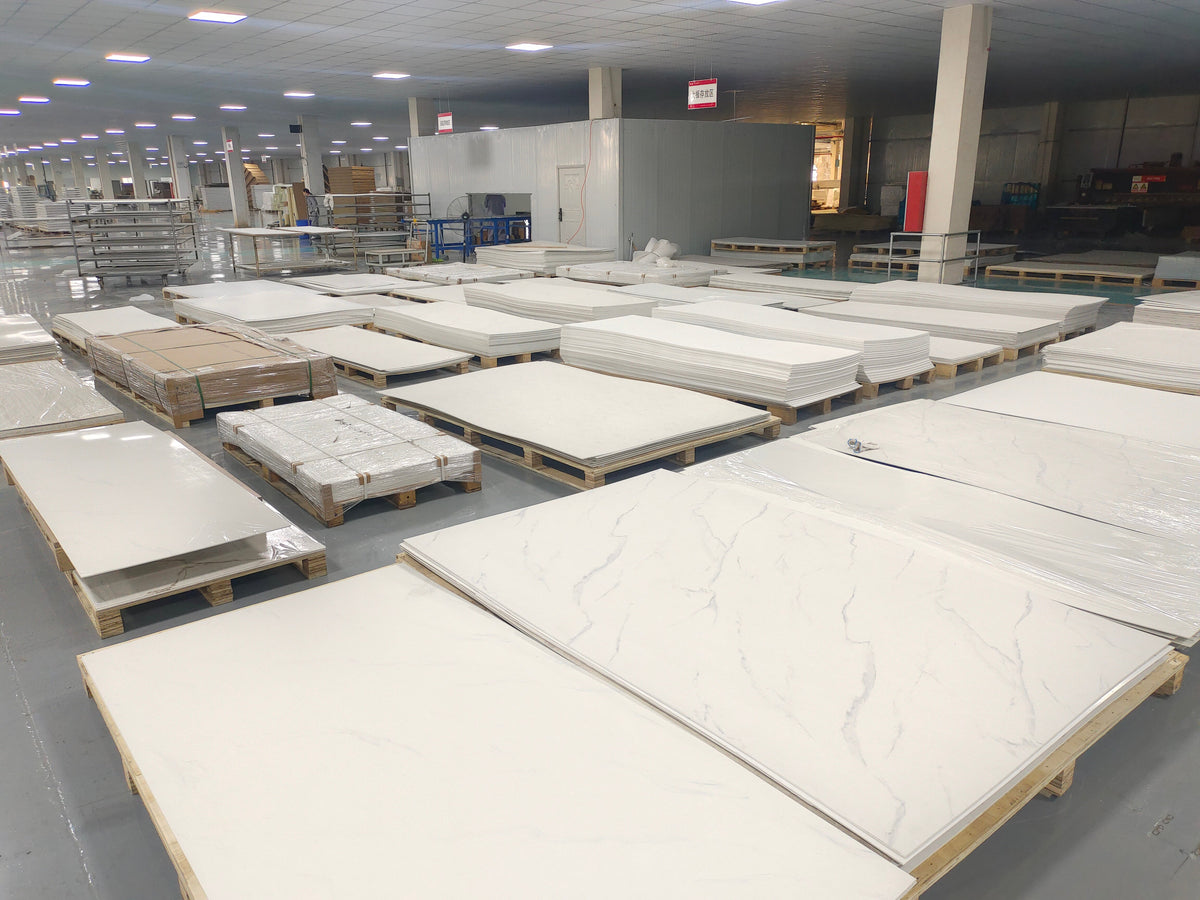
How SMC Composition Affects Bathroom Product Performance
SMC (Sheet Molding Compound) is widely used in composite products that require a balance of strength, durability, and consistent manufacturing quality. In bathroom applications, it is used to produce products such as wall panels and shower bases.
But what actually determines the performance of an SMC product? It is not simply the name of the material. The composition of the compound—and how its ingredients work together—plays an important role.
Understanding these components can help builders, contractors, and distributors make more informed decisions when evaluating bathroom materials.
1. What Is SMC Made Of?
SMC is a fiber-reinforced composite material, typically made from four main groups of ingredients:
-
Resin: Forms the matrix that binds the other components together.
-
Glass fiber: Provides reinforcement and helps improve mechanical strength.
-
Mineral fillers: Such as calcium carbonate, help control shrinkage, dimensional stability, and material cost.
-
Additives: Support processing, curing, surface quality, and other material characteristics.
The exact formulation varies depending on the intended application and required performance. There is no single formula that applies to every SMC product.
2. How Each Component Affects Product Performance
Although these ingredients are combined into one material, each serves a different purpose.
Resin: The Foundation of the Composite
Resin forms the continuous matrix of SMC and holds the reinforcing fibers and fillers together. It also plays an important role in the finished product's resistance to moisture and chemicals.
For bathroom products, this matters because wall panels and shower bases are regularly exposed to water, humidity, and cleaning products. The resin type, formulation, and curing quality all influence how the finished material performs in these conditions.
Glass Fiber: Supporting Structural Strength
Glass fiber acts as reinforcement within the resin matrix. It helps improve the composite's mechanical properties, including tensile and flexural strength.
For shower bases, structural performance matters because the product must withstand everyday use and loading. For wall panels, reinforcement contributes to the panel's overall strength and stability.
However, simply adding more glass fiber does not automatically guarantee a better product. Fiber distribution, resin impregnation, and the molding process also affect the final result.
Mineral Fillers: Helping Control Shrinkage and Stability
Mineral fillers, such as calcium carbonate, are commonly used in SMC formulations.
They can help control molding shrinkage and improve dimensional stability. This is important when manufacturing bathroom products that need consistent shapes and dimensions.
For wall panels and shower bases, dimensional consistency supports accurate fitting and helps products maintain their intended geometry.
The type and amount of filler need to be balanced with the other ingredients. A formulation should be designed around the performance requirements of the finished product, rather than simply minimizing material cost.
Additives: Supporting the Manufacturing Process
SMC formulations may also contain catalysts, thickeners, low-shrink additives, and mold-release agents.
These ingredients help control the material's processing behavior, curing reaction, shrinkage, and release from the mold. Although they are generally used in smaller quantities, they can have a significant influence on manufacturing consistency and finished surface quality.
3. Why the Manufacturing Process Matters
A well-designed formulation is only part of the equation. The manufacturing process also affects the final product.
SMC products are commonly manufactured through compression molding. The prepared compound is placed into a mold, where controlled heat and pressure help it flow, fill the mold cavity, and cure into its final shape.
Several factors influence the result:
-
Material distribution: Helps ensure consistent reinforcement and composition throughout the product.
-
Molding temperature and pressure: Affect material flow and curing.
-
Curing time: Helps the resin develop its intended properties.
-
Mold condition: Influences product dimensions and surface finish.
Even when two products are both described as SMC, differences in formulation and manufacturing control can lead to differences in their finished performance.
4. What Does This Mean for Bathroom Wall Panels and Shower Bases?
In bathroom applications, material performance needs to be considered alongside product design and installation requirements.
For SMC Bathroom Wall Panels
Wall panels need to maintain their shape and provide a suitable surface for everyday bathroom use. The resin formulation, reinforcement, and molding quality all contribute to the finished panel's properties.
Panel design also matters. Features such as interlocking edges can help panels align and fit together during installation, while appropriate joint treatment remains important for moisture protection.
For SMC Shower Bases
Shower bases must handle regular loading and continuous exposure to water. Material composition contributes to structural performance and dimensional stability, while the base's molded design helps manage water drainage.
For example, a one-piece molded base with a sloped surface and raised water-retaining flanges is designed to direct water toward the drain and help contain it within the shower area. Proper installation and sealing are still essential to the overall waterproofing performance.
In both applications, the material and the product design work together. Neither should be evaluated in isolation.
5. What Should Buyers Look for When Evaluating SMC Products?
For builders, contractors, developers, and distributors, the material name alone is not enough to assess product quality.
When comparing SMC bathroom products, consider these factors:
-
Material specifications: Ask about the resin system, reinforcement, and relevant material properties.
-
Product performance: Review applicable test reports for strength, water absorption, fire performance, or other project requirements.
-
Manufacturing consistency: Understand how the manufacturer controls material preparation, molding, and quality inspection.
-
Product design: Evaluate panel dimensions, connection details, shower base structure, and drainage design.
-
Installation requirements: Confirm the recommended installation method, joint treatment, and compatible materials.
The right product should meet the technical and practical requirements of its intended application—not just look good in a product catalog.
Conclusion
SMC is more than a single raw material. It is a composite in which resin, glass fiber, mineral fillers, and additives work together to determine the properties of the finished product.
For bathroom wall panels and shower bases, the right formulation, controlled manufacturing process, and thoughtful product design all contribute to performance and consistency.
When evaluating bathroom materials for construction projects, looking beyond the material name can help buyers make better-informed decisions.
Looking for SMC bathroom wall panels or shower bases for your next project?
Explore Kostone's bathroom solutions for North American construction projects at www.kostoneus.com or contact our team at info@kostone.com.
Share:
How Much Does a Bathroom Remodel Cost? A Complete Cost Breakdown